
by Mark Folkes | Aug 8, 2024 | Blog, Historic & Traditional Skills, Stonemasonry
The ancient walls of a cathedral, the intricate stonework of a medieval castle, or the enduring facades of historic homes; these buildings are truly a part of our cultural heritage. They can tell us stories of a time gone by, encapsulate the talent and craftsmanship of generations past, and weave a tapestry of thousands of years of untold history. Preserving these heritage sites is not just about maintaining physical structures – it’s about sustaining the traditions and techniques that have also helped to build them. And among these, the use of lime products in these craft techniques stands out as crucial.
Traditional craft techniques are time-honoured methods passed down through generations, tailored to the materials and technologies of their time. Continuing to use them today ensures that heritage sites maintain their authenticity, their treasured aesthetic, and their structural integrity.


Lime, particularly in the forms of lime mortar and lime plaster, has been a cornerstone of construction for millennia, and even now, lime products offer several advantages that modern materials often cannot match. This tends to mean that these lime products are indispensable for the conservation and preservation of many English heritage sites.
Despite the clear advantages, the use of traditional stonemasonry and lime products faces several challenges. Modern construction often favours speed and cost-effectiveness, leading to the widespread use of cement and synthetic materials. And sometimes, unfortunately, we uncover work carried out in the past hundred years or so that has attempted to adopt these more modern materials and techniques – only to the detriment of the historic building and its structure. That’s why we consider it so important to continue the traditional work that we carry out, and share the knowledge of its importance.
There is also a dwindling number of artisans skilled in these ancient methods, making it imperative to invest in training and education for a new generation of craftspeople to take these challenges on. When we preserve these methods of craft, we are preserving a treasured part of our culture and its history, and that’s why we believe it’s so important to share our skills.
Heritage Lime’s very own Nick, for example, has been involved with teaching courses and exhibitions at the highly esteemed Highgrove Estate. Passing on the principles of conservation and stonemasonry with his extensive experience and knowledge, the Highgrove Estate is the perfect setting to emphasise the importance of passing these crafts on to the next generation. He was also recently able to share his skills at the wonderful Cotswold Show, and inspire the young and curious to try their hand at this traditional craft with a hands-on demonstration!


We believe that the challenges that traditional craft face in fact present us with opportunity. There’s a growing recognition of the value of heritage conservation, both culturally and economically. Historic sites can attract tourism, foster community pride, and provide a tangible link to our past. By promoting the use of traditional techniques and lime products, we can ensure these structures remain vibrant and enduring symbols of our heritage for many more years to come.
So when we preserve these methods of traditional craft, not only is it favourable for the preservation of these beautiful buildings, it is also essential for passing down knowledge and experience that has been gifted to us by generations past, as well as preserving the integrity of this history that is all around us. And it’s not just a matter of maintaining old sites; it is about honouring and perpetuating the craftsmanship and wisdom of our ancestors, inspiring new generations to pass this wisdom along, and keeping it alive for centuries to come. As stewards of our cultural heritage, we are proud to embrace the past, preserve this living legacy, and ensure that we are passing it on to the future.

by Mark Folkes | Apr 13, 2024 | Blog, Historic & Traditional Skills, Lime Products
Masonry has been an integral part of human civilisation since ancient times, and lime has been a material that’s been used throughout it all. Its significance stretches across millennia, and it’s been an enduring symbol of innovation and longevity throughout. All across the globe, the techniques of working with lime have become a constant, albeit ever-evolving, cornerstone of construction. So let’s delve into the historical journey that lime has taken, and uncover the legacy that it has left on the world.
6000 Years of Using Lime…
The story of lime begins all the way back when ancient cultures first discovered its remarkable properties. As far back as 6000 years ago, Egyptians, Greeks, and Romans have utilised lime in various forms to create enduring structures that have withstood the test of time; around 5.5 million tonnes of limestone and 500,000 tonnes of mortar were used to build the Great Pyramid in Egypt. This stone formed part of an outer layer of fine white limestone that would have made the sides of the pyramid completely smooth, and had a polished effect that would have gleamed in the sun. These casing blocks were transported over 15km from a quarry downriver from Giza. By the 19th century, most of the casing blocks had been removed and used for other building work, which – whilst a shame for the Pyramids to not shine in their former glory – does support the notion that lime is able to be perpetually reused and recycled, further contributing to its positive effects that lime can have on the environment.
Lime provided these ancient builders with a versatile material for creating durable mortar and plaster, and the Greeks and Romans further refined its use in masonry construction. The Romans, in particular, elevated lime to new heights of sophistication; they invented hydraulic lime, which possessed the ability to set underwater. By blending lime with pozzolan – a finely powdered material possibly made from volcanic ash or brick dust at the time – the mixture hardened much quicker, allowing it to be used in settings such as ponds and aqueducts.
This legacy continued throughout time, as monks continued these practices throughout the medieval era to create places of worship, and architects of the Renaissance era sought inspiration from the Roman masters in their masterpieces too. The Gothic cathedrals of France, and the graceful domed architecture of some of Italy’s most iconic buildings all owe their beauty and their durability to the past innovation of the Romans.
…And Here’s to 6000 More?
Of course, lime continues to play a prominent role in masonry construction to this day. Valued for its sustainability, durability, and aesthetic appeal, architects and builders are continuing to showcase the virtues of lime as a natural and environmentally friendly alternative to conventional cement-based materials. From historic preservation projects to contemporary sustainable design, lime continues to be as relevant in masonry today as it ever has been.
At Heritage Lime, we are proud to continue the craft and practice of these traditional methods moving forward into the modern day. Our materials and masonry skills have been used for the renovation and preservation of numerous historical buildings across the country, and we are proud to be training a new generation of builders to inherit this knowledge as well.
Thanks to The King’s Foundation, we will be teaching the principles of conservation and stone repair at the highly esteemed estate of Highgrove in the South West. Synonymous with craftsmanship and aesthetic excellence, the Highgrove estate has the facilities for training and education in order for apprentices to put their newly acquired skills into practice. It is an honour for us to be able to collaborate with The King’s Foundation – not only due to the high esteem of this prestigious estate, but to help continue the practice of these traditional methods for years to come, and see that these practices are preserved and passed onto the next generation of builders and into the modern day.

by Mark Folkes | Feb 18, 2024 | Blog, Lime Products, Services, Stonemasonry
The beginning of the new year is often a good time to think about your health and wellbeing. Or perhaps you might consider it a time to get to work, ticking off some of those home improvements that you’ve been meaning to complete around the house! But have you ever considered just how much your surroundings can contribute to your health too?
Well, when you use limestone, such as Lime Render or Lime Mortar for your home improvements, you can kill two birds with one stone! Limestone is not only a positive choice when taking your health into consideration, but can be low impact and beneficial for the environment too. Let’s take a little look at the green benefits of using lime for the planet – and for you too.
Why is using limestone good for me?
Limestone has an ability to absorb moisture from the environment; this actively contributes to a healthier and more comfortable indoor environment for you thanks to it hindering the growth of fungi and bacteria. This in turn prevents the development of mould and mildew, which if excessive could actually lead to health concerns – problems such as coughing, wheezing, shortness of breath, and even skin conditions can progress due to damp and mould. You can read more about the negative impact of damp in our previous blog post.
Limestone’s amazing moisture-absorbing properties can even help maintain humidity levels in your house, helping to reduce odours and on the whole help contribute to a more comfortable and enjoyable indoor climate. High humidity levels in indoor environments can exacerbate allergies and respiratory conditions by allowing dust mites and other allergens to thrive, so by absorbing excess moisture, limestone can help limit the proliferation of allergens.
Not only this, but it is proven that living in cold and damp conditions comes with its own threats to your mental health too. Whether it be persistent worries about financial constraints, or anxiety about the aforementioned potential health repercussions, all of these factors can total up to a home life that’s full of stressors. So ticking those projects off your to-do list can help your physical and mental wellbeing alike – who knew there was so much that lime could achieve?
Why can using limestone be good for the environment too?
Limestone has an abundance of qualities that make it the ideal choice for people that are conscious of their project’s impact on the environment too. It’s one of the most abundant materials on earth, meaning its widespread availability helps to reduce the need for extensive transportation – straight away, this lowers carbon emissions associated with logistics.
Another quality that makes it the best material of choice is its unique ability to capture and store carbon dioxide from the atmosphere. Limestone has a natural affinity for CO2 and can chemically bind with it through a process called carbonation – this ensures that captured CO2 remains locked away, preventing it from re-entering the atmosphere.
Its thermal properties also make it an excellent material for energy-efficient construction; it has high thermal mass, which helps regulate indoor temperatures and reduce the need for heating and cooling, consequently lowering energy consumption and associated greenhouse gas emissions.
So there you have it, lime can be a great solution for maintaining your health, and for the environment as well. Consider using lime in your next project for the sake of your carbon footprint, your respiratory health – and for your mental wellbeing too!

by Mark Folkes | Jan 15, 2024 | Blog, Lime Products, Services, Stonemasonry
Ah, the January blues. The spirit of Christmas has been and gone, and everyone seems to have the perpetual sniffles. It’s that time of year again where the rain doesn’t stop for weeks on end, and the cracks can (quite literally) begin to show in the defences you have in place in your home against rain and damp.
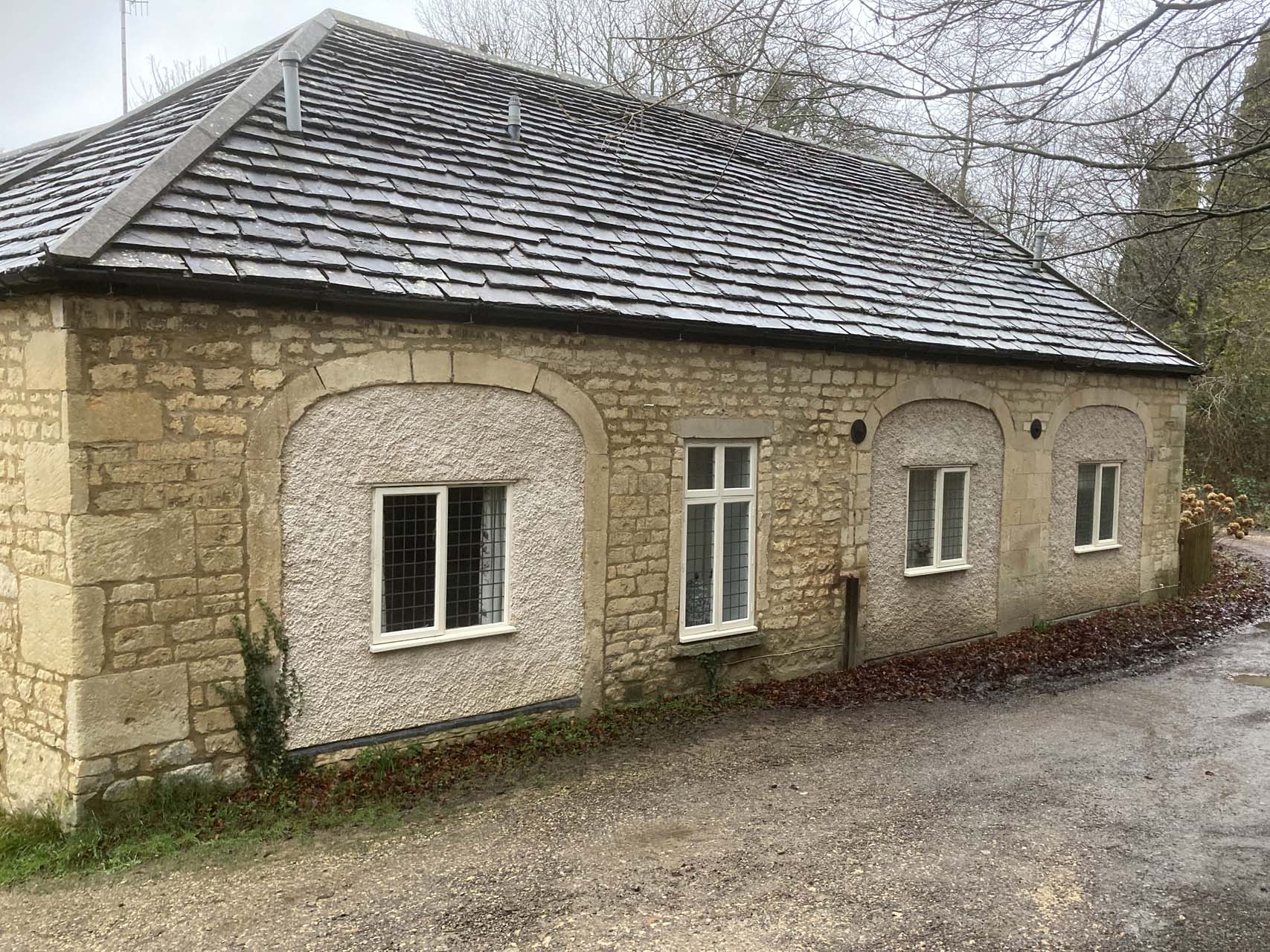
Damp issues in your home can be a real headache; not only can they compromise your home’s structural integrity, but they can also diminish your indoor air quality too – which can ultimately have a negative impact on your health and wellbeing. However, lime render can be a versatile and effective solution to tackling damp-prone environments. Let’s explore how the use of lime render can address your damp problems, and contribute to healthier air quality and a more sustainable home for you.
How can Limestone and Lime Rendering help me with damp?
Breathability
One of the key benefits of lime render lies in its breathability. Lime is known for its hygroscopic nature – this means it can absorb and release moisture from the surrounding air. Unlike traditional cement-based renders, lime allows moisture to evaporate from the walls, preventing the buildup of trapped moisture inside them. This quality is crucial in damp areas, helping to regulate moisture content and humidity levels and maintain a healthier indoor environment – giving you a layer of defence against damp issues in your home.
Lime Render Flexibility
Lime render exhibits greater flexibility compared to its cement counterpart, reducing the risk of cracks. This flexibility is particularly important in areas where buildings may experience slight movements – which is why lime render is often the material of choice for historic or heritage buildings. By minimising the occurrence of cracks, lime render helps keep water at bay and ensures the longevity of the building facade, without compromising the integrity of the structure – or the aesthetics!
Environmental Benefits
One of the many benefits of using lime in your battle against damp is the alkaline nature of lime render; this inhibits the growth of mould and fungi, offering you a natural defence against microbial infestations in places that may have been susceptible to damp and mould build-up before. Lime is also a natural material with a lower environmental impact compared to cement-based materials; lime production generally requires less energy compared to cement, as well as releasing less CO2 during production as well.

How can we tackle damp?
Whilst lime render is a powerful tool in damp management, it’s essential to note that it may not be a standalone solution for severe cases of damp. Thoroughly diagnosing the underlying causes – such as faulty drainage or rising damp, for example – is crucial. Combining lime render with targeted solutions for these issues ensures a comprehensive approach to tackling your damp problems once and for all.
If you’re faced with damp challenges in your home, you should consider how the benefits of lime render can help you to create a healthier, and more resilient building. Get in touch with our expert team, who can help you to uncover the best methods for you in your battle against damp this January.

by Mark Folkes | Jul 8, 2023 | Blog, Historic & Traditional Skills, Stonemasonry
Lime is the principal binder of most traditional mortars, plasters and renders, with it central to the successful maintenance and repair of traditional buildings and their fabric. An understanding of lime is essential for anyone working on historic buildings and construction in general.
The history of lime being used for building in Britain is a long one, with the romans employing it in their construction. This has been continued to be used today, with lime regarded as one of the most ecological and environmentally friendly sources when it comes to construction.
In order to gain a feel for just how efficient lime products are in Britain, here are some monuments and attractions that used lime materials in their construction.
The Pontcysyllte Aqueduct
Known as the ‘stream in the sky’, the Pontcysyllte Aqueduct is a navigable aqueduct that carries the Llangollen Canal across the River Dee in the Vale of Llangollen in northeast Wales. Completed in 1805, it is used for narrowboat transportation, having been a key part of the central section of the proposed Ellesmere Canal, an industrial waterway that would have created a commercial link between the River Severn at Shrewsbury and the Port of Liverpool on the River Mersey.
Built by civil engineer Thomas Telford, the aqueduct is 12 ft (3.7 metres) wide and is the longest aqueduct in Great Britain (307 metres) and the highest canal aqueduct in the world. You can walk, cycle or boat across the aqueduct, only a mere 125 feet in the air! The mortar used by Telford to compromise the stones of the aqueduct was made from lime, water and ox blood. Due to its rich history and interesting manor, the landmark is classed as a World Heritage Site. A World Heritage Site is a landmark or area with legal protection by an international convention administered by the United Nations Educational, Scientific and Cultural Organization (UNESCO).
Eddystone Lighthouse
The Eddystone Lighthouse lies on the Eddystone Rocks in southeast Cornwall, 13 miles southwest of the small-port city of Plymouth. The interior of the construction uses limestone masonry, with the rocks supporting the lighthouse itself submerged below sea level. Located in some of the harshest weather conditions in the country, the need for the lighthouse came due to mariners not being able to see the rocks, causing multiple shipwrecks locally.
Being the fourth of its kind, the structure has remained since 1882. The first lighthouse (Winstanley’s) was swept away in a powerful storm, killing its architect and five men in the process. The second (Rudyard’s) stood for fifty years before it burned down. The third (Smeaton’s) is the best known, renowned because of its influence on lighthouse design and its importance in the development of concrete for building; its upper portions were re-erected in Plymouth as a monument. The first lighthouse, completed in 1699, was the world’s first open ocean lighthouse.
The strength of the structure is very impressive, with it being able to withstand even the worst of storms, even after being moved, block by block, in the 19th century, making it one of the most infamous lighthouses not only in the UK, but in the world.
Conwy Castle
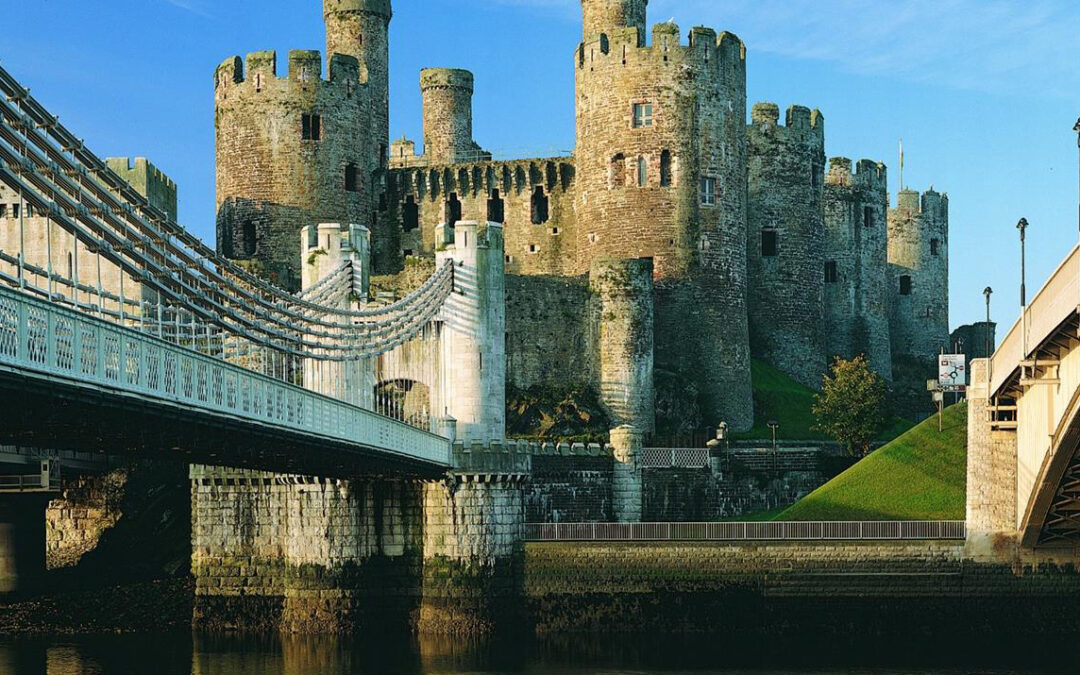
Constructed by Edward I during the conquest of Wales between 1283 and 1289, the Conwy Castle is located in Conwy, North Wales. Over the next few centuries, the fortification played an important part in several wars, including acting as a temporary haven for Richard II in 1399. Following the outbreak of the English Civil War in 1642, the castle was held by forces loyal to Charles I, holding out until 1646 when it surrendered to the Parliamentary armies. Likewise, to the Pontcysyllte Aqueduct, it is known as a World Heritage Site.
The castle is defended by eight large towers and two barbicans, with a postern gate leading down to the river, allowing the castle to be resupplied from the sea. It retains the earliest surviving stone machicolations in Britain. The castle sits on a coastal ridge of limestone and grey sandstone. Much of the material of the castle was taken from the ridge itself, but some sources of sandstone were brought in from neighbouring cities and towns.
These are just three examples of the hundreds of sites that contain lime-based products in their construction in the UK, let alone worldwide! The efficiency and long-lasting life of lime in buildings has continued to pass the test the time, even in some of the most dangerous conditions.
by Mark Folkes | Jul 8, 2023 | Blog, Lime Products, Services
In the world of construction, lime has been used as a primary ingredient for centuries, with it continuously used in the present day for both historical and contemporary applications. Used for a variety of benefits, lime is a major constituent in exterior and interior structures and plasters, enhancing the strength, durability, and workability of these finishes. Whilst lime can be used for building conservation and renovation, it is also becoming a popular choice for new builds due to its superior aesthetic properties that it possesses. Used in mortar, render, plaster, putty and more, builders across Britain are rapidly upgrading their materials to lime products to gain the best results possible, whilst also staying environmental and cost friendly. Let’s have a look at some of the key benefits to switching to lime-based products today!
Reduced Cracking and Movement
Incorporating lime in your projects will help the construction withstand the minor movements that occur naturally inside the sedimentary (thermal expansion, contraction, erosion…etc). These movements and changes can cause products to develop large cracks or to ‘debond’ from the substrate, often damaging the substrate. Incorporating hydrated lime into the mixture encourages crack formation to be in the form of gradual ‘micro-cracking’ within the material, rather than large cracking which can appear on the outside of the material over time. These micro-cracks therefore repair themselves naturally by a process of hydrated lime diffusing into these tiny fissures created naturally and then hardening by reacting with atmospheric carbon dioxide to form calcium carbonate (limestone). This process is commonly known as ‘autogenous healing’, the process of concrete to repair in the presence of moisture (our lime products). This will ensure your project and the materials used will be sturdy and strong for a prolonged period, whilst also continuing to look aesthetically pleasing with the reduced amount of natural cracking and movement.
Ecologically and environmentally friendly
- Lime has less embodied energy than cement
- Free lime absorbs carbon dioxide in the setting process of carbonation
- Lime is produced on a small and cost-efficient scale
- The gentle binding properties of lime enable full re-use of other materials
- Small quantities of lime can protect otherwise vulnerable, very low energy materials
- Using less embodied energy than cement with the benefit that it can be produced on a small scale
- Can survive harsh weather conditions, so the environment will not be damaged through collapsing construction
Moisture movement, frost resistance and durability
The improved quality of the bond, and absence of large (or small) cracks, which comes from incorporating hydrated lime helps to reduce the risk of water ingress. This is when water infiltrates your project unknowingly. This term can also be used to describe the penetrating damp that can permeate some properties. Common signs that you have water ingress in your project is the development of mould and damp patches. However, mixtures containing appropriate proportions of hydrated lime have the ability to transmit water vapour (vapour permeability) than cement-only mixtures. This helps to stabilise the internal humidity of a building by absorbing and releasing moisture. This makes for a more comfortable environment and reduces surface condensation. This helps moisture to dissipate, allowing the structure to ‘breathe’ accordingly, therefore reducing any risk of frost damage due to saturation. Once again, this maintains the durability of the rock. So much in fact that even Caesar’s Tower at Warwick Castle has stood the test of time for over 600 years, with many cathedrals across the country and worldwide standing significantly longer. An outstanding example is the Pantheon Temple in Rome which has a lime concrete dome spanning over 43 metres (142 feet). This has survived for nearly 2000 years!
These are just some of the many benefits of using our range of lime products we have in stock. Lime-based products are easy to work with, remaining smooth and malleable, and they give a beautiful finish that develops a rich patina over time. Why not try it today? Check out our range of products now!
